
Non Invasive (NI) Technologies
Non-Invasive Glucose Detection
Needle‑Free. Reagent‑Free. Pain‑Free.
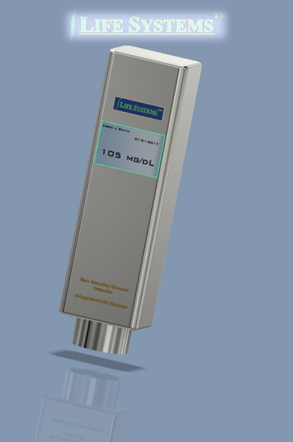
Groundbreaking Advance: ILS has developed a non‑invasive glucose detection technology that eliminates blood draws, needles, reagent patches, and skin‑penetrating probes.
Built on ILS's proprietary DDLS Platform
Clinical Impact
37 million Americans live with diabetes
96 million are pre‑diabetic
Needle‑free monitoring improves compliance and reduces complications


Technical Foundation
Our spectroscopy platform detects biophysical changes correlated with glucose levels — without skin penetration or chemical reactions.
DDLS incorporates multi scientific and technological disciplines

Biochemical Basis
Biological cells, e.g., Red blood cells, chemically react with glucose (glycation)
Glycation changes cell morphology
Correlates to the extent of cell glycation
Correlates to blood glucose concentration

Biophysical Basis
THE key equation is the modified autocorrelation function, C'(t ):
C(t) is the time-autocorrelation function for the Brownian motion (no applied electric field);
C'(t) is the autocorrelation function modulated by the electric field; where:
t is time "shift"
q is an experimental constant
v is the instantaneous velocity of the particles under applied field gradient
C'(t) is analyzed by the Fourier transform (FT)
peaks in the ft indicate condition of biological cell
peaks introduce features to resolve complex multi-component mixtures


Notes on Market and Potential Impact
CGM: Market evaluated between $20-$40 Billion, driven by diabetes.
The Non-Invasive Diagnostics Paradigm: For glucose, the targets a multi-billion dollar vacuum. By leveraging dielectric signatures via DDLS rather than struggling with standard optical scattering or near-infrared limitations, The technology effectively hold the keys to a true non-invasive consumer and clinical device category.
Cancer Cell Detection & Liquid Biopsy: Applying DDLS to oncology (such as isolating or profiling circulating tumor cells, rare cell phenotypes, or macromolecular shifts in biofluids based on polarizability) targets the booming liquid biopsy and early-detection markets. Standard oncology diagnostics rely heavily on expensive genomic sequencing or affinity-based capture methods that can miss heterogeneous or rare cells. A label-free, physical-property-driven detection method changes the economics and speed of screening entirely.
Although continuous glucose monitor (CGM) devices reduce how often the skin must be punctured, they still require reagent patches and a probe (needle) inserted into the patient's body, which must be replaced regularly. By contrast, ILS devices need neither needles nor reagent patches.

